2027: Don’t Make Promises You Can’t Fulfil, Cleric Warns Politicians
Emeka
2027: Don’t Make Promises You Can’t Fulfil, Cleric Warns Politicians
A Kaduna-based Islamic scholar and former Special Adviser to two former Kaduna State governors, Sheikh Haliru Maraya, has warned politicians seeking elective offices in the 2027 elections against making promises they cannot realistically fulfil just to win votes.
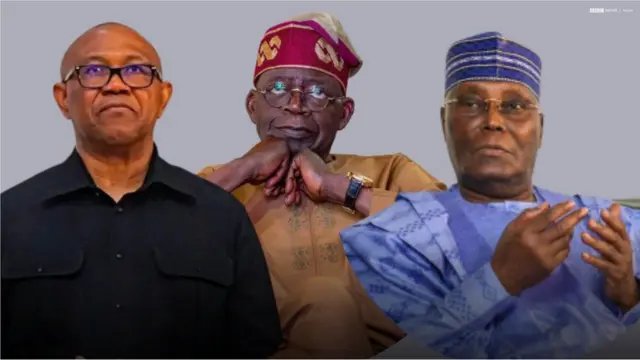
Maraya urged presidential candidates and other politicians to be truthful with Nigerians about the country's economic realities and clearly state what they can reasonably achieve if elected.
He spoke in Kaduna on Sunday while reacting to calls by some politicians for the restoration of fuel subsidy, arguing that Nigeria could no longer sustain such a policy without further worsening its economic challenges.
The cleric cautioned politicians against taking advantage of the economic hardship faced by Nigerians by making campaign promises they know may be impossible to fulfil after assuming office.
“Presidential candidates should always tell people the truth. They should not deceive Nigerians simply because they want to win votes. God does not like lies and deception,” he said.
Maraya maintained that Nigeria's current economic situation could not support a return to the fuel subsidy regime, which he described as a heavy financial burden.
“At present, Nigeria’s economy, to be honest, cannot afford to continue paying fuel subsidies as it did in the past. If the subsidy is brought back, the economy could collapse within a short time, and the government may be unable to do other important things,” he said.
According to him, estimates place Nigeria's daily petrol consumption at between 47 million and 64 million litres, while the total cost of a litre, including refining, transportation, insurance and customs charges, stands at about N1,218.
He said returning to the subsidy regime would require the Federal Government to commit huge resources that could otherwise be invested in infrastructure and other development projects.
“If Nigeria takes on the cost of the subsidy as it did in the past, it would spend about N52.3bn every day. That would amount to about N1.6tn every month and more than N19tn every year,” Maraya said.
The Islamic scholar questioned how the government would fund such expenditure, particularly with Nigeria's 2026 budget estimated at N68.3 trillion.
He therefore urged politicians to carefully consider the economic implications of their campaign promises before presenting them to Nigerians.
“People should not make promises they cannot fulfil simply because they want votes and political power. Later, such a person may come back and apologise to Nigerians, saying that they did not know how difficult the situation was,” he said.
Maraya said Nigeria needed leaders with the courage to tell citizens the truth about the economy and take difficult decisions in the country's overall interest.
“We Nigerians need leaders who will tell us the truth about the state of our economy and then take the right decisions concerning the removal of fuel subsidy,” he said.
He also appealed to Nigerians to remain patient with the removal of fuel subsidy, arguing that funds previously spent on subsidising petrol could be redirected towards development projects.
“We should be patient with the removal of the subsidy because the government was spending N52bn every day on it. The money saved can be used to carry out other development projects for the country and its people,” he said.
However, Maraya urged the Federal Government to prioritise the rehabilitation of Nigeria's existing refineries and support the establishment of additional ones to reduce dependence on imported petroleum products.
“We hope Nigerians will continue to be patient until our four refineries are repaired. We also hope that new refineries will be built in the future so that some of the problems we are facing in the country can be solved,” he said.
The former special adviser acknowledged that Nigerians would prefer a smoother transition following the removal of the subsidy but maintained that the country's economic circumstances had made difficult decisions necessary.
“We all prefer everything to go smoothly, but Allah did not make it happen that way,” Maraya said.
He warned that restoring fuel subsidy without a sustainable plan for financing it could place further pressure on public finances, weaken economic activities and disrupt government operations.
“If the fuel subsidy is brought back, within a short period, economic activities could come to a standstill and government operations could also be affected,” he said.