Uzor Kalu Identifies Fuel Prices, Naira Exchange Rate as Major Problems Crippling Nigeria’s Economy
Emeka
Uzor Kalu Identifies Fuel Prices, Naira Exchange Rate as Major Problems Crippling Nigeria’s Economy
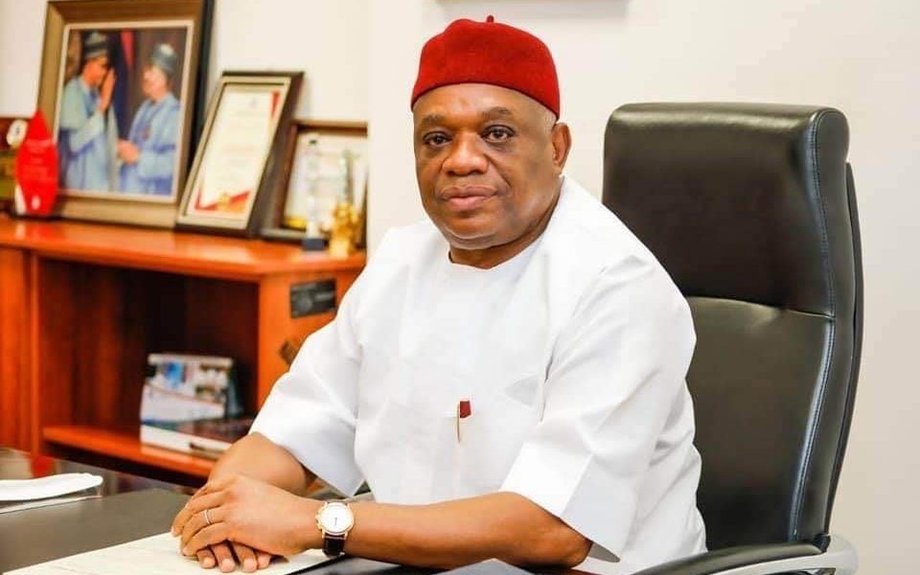
The lawmaker representing Abia North Senatorial District, Orji Uzor Kalu, has identified the price of fuel and the naira exchange rate as two major challenges crippling Nigeria’s economy.
Kalu made the assertion on Monday during an interview on News Central Television.
He argued that Nigeria could not build a sustainable economy by relying heavily on crude oil while importing basic necessities.
According to the senator, the country must shift towards increased domestic production across various sectors to achieve long-term economic stability and growth.
“There are two things crippling this economy … the price of fuel and the price of the dollar,” he said.
Kalu also criticised the reluctance of some government officials to make sacrifices necessary to address the country’s economic challenges.
“We cannot build a sustainable economy by relying on oil. Sometimes, I also blame government officials who don’t agree to make some sacrifices to see truly how our economy is running,” he said.
The former Abia State governor acknowledged the frustration among young Nigerians over the state of the economy, noting that many citizens were increasingly concerned about when economic hardship would end.
“And, to be honest with you, the young people are right because anybody will wake up and say, ‘Oh, when will this be over?’” he said.
Kalu maintained that Nigeria’s economy had remained largely unproductive for decades and stressed the need to prioritise production.
“This economy has been unproductive since 1960. What I do is production, and I continue to say that the economy must be productive. We must produce,” he said.
He further argued that increasing crude oil production alone would not resolve Nigeria’s economic problems if the country continued to depend on imports for essential goods.
“If we don’t produce, no matter the amount of oil you get out of the Niger Delta or elsewhere, it’s not going to be our solution,” Kalu said.
He called for the proceeds from crude oil to be used to support domestic production and provide essential goods, particularly food, rather than perpetuating the country’s dependence on imports.