Trump Raises US Global Tariff to 15% After Supreme Court Setback
theoversightnews
Trump Raises US Global Tariff to 15% After Supreme Court Setback
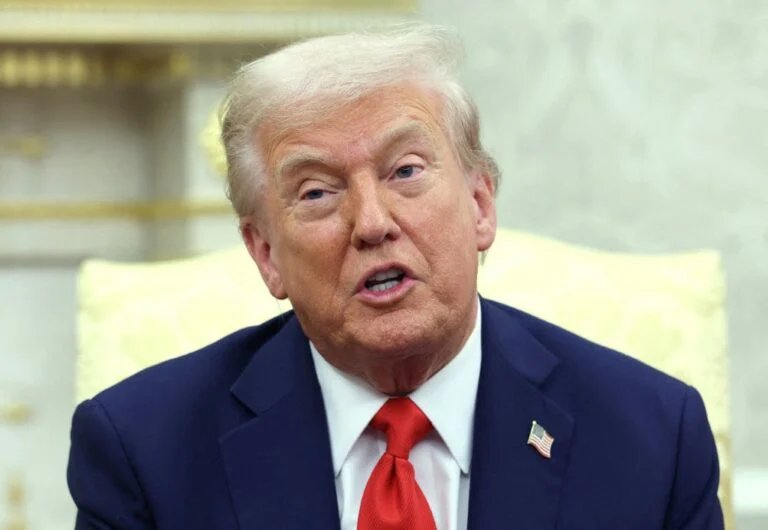
President Donald Trump on Saturday announced a 15 per cent global tariff on imports entering the United States, pressing ahead with his hardline trade agenda despite a major legal setback from the Supreme Court of the United States.
In a post on his Truth Social platform, Trump criticised the court’s ruling as “extraordinarily anti-American” and declared that his administration would immediately adjust import duties “to the fully allowed, and legally tested, 15% level.”
The high court had, in a 6–3 decision on Friday, ruled that the president lacked authority under a 1977 emergency economic powers law to impose sweeping tariffs. Shortly after the judgment, Trump introduced a 10 per cent universal tariff through an alternative legal mechanism before escalating it to 15 per cent.
He also took aim at conservative justices who joined the majority opinion, accusing them of betrayal and describing their stance as disloyal.
Although the court has generally delivered favourable rulings for Trump since his return to office 13 months ago, this decision represents one of the most consequential judicial rebukes of his current term.
The latest tariff adjustment is likely to deepen uncertainty in global trade, as the administration has repeatedly imposed, modified and withdrawn various duties over the past year while negotiating with trading partners.
According to the White House, the 15 per cent levy is temporary and permitted for up to 150 days under existing law. Exemptions remain for sectors under separate investigations, including pharmaceuticals, as well as goods traded under the United States-Mexico-Canada Agreement.
Officials also indicated that countries which previously secured bilateral tariff arrangements with Washington would not be shielded from the new global rate.
High Court Repercussions
The ruling does not affect targeted tariffs already imposed on steel, aluminium and certain other products, nor does it halt ongoing federal investigations that may lead to additional sector-based duties.
Trump publicly commended the three dissenting justices — Clarence Thomas, Samuel Alito and Brett Kavanaugh — praising their “strength and wisdom.” He further alleged, without evidence, that the majority justices had been influenced by foreign interests.
Financial markets responded cautiously, with Wall Street posting modest gains following the decision, which analysts had largely anticipated. The National Retail Federation welcomed the judgment, stating that it provided greater predictability for businesses.
During oral arguments, the administration had suggested that companies would receive refunds if the tariffs were ultimately ruled unlawful. However, the Supreme Court did not address the refund issue directly. Trump predicted that legal battles over potential reimbursements could stretch on for years, while Justice Kavanaugh noted the process could prove complicated.
Global leaders reacted quickly. German Chancellor Friedrich Merz said he would coordinate with European partners to form a unified response ahead of a planned visit to Washington.
Domestically, Pennsylvania Governor Josh Shapiro called on the president to heed the court’s ruling and abandon what he termed “chaotic tariffs,” warning that continued uncertainty could harm farmers, small businesses and American households.