On your marks, set, go: Parties race against May deadline for primaries
theoversightnews
On your marks, set, go: Parties race against May deadline for primaries
Political parties across the country are racing against time after the Independent National Electoral Commission (INEC) released a revised timetable for the 2027 general elections.
Under the new schedule announced on Thursday, presidential and National Assembly elections will hold on January 16, 2027, while governorship and state assembly elections are slated for February 6, 2027.
In a statement, INEC’s National Commissioner and Chairman of the Information and Voter Education Committee, Mohammed Haruna, said the commission approved the revised timetable following changes introduced by the Electoral Act 2026.
According to the new arrangement, political party primaries — including the resolution of disputes arising from them — will commence on April 23, 2026, and conclude on May 30, 2026, giving parties 91 days to finalise their candidate selection processes.
The Electoral Act 2026 also requires parties to submit their digital membership registers to INEC at least 21 days before any primary, congress, or convention. Failure to comply may result in disqualification from fielding candidates.
Opposition Races Against Time, Kicks
Opposition parties have criticised the timetable, arguing that it places them under undue pressure and gives the ruling All Progressives Congress (APC) an advantage.
Speaking with Saturday PUNCH, the factional National Publicity Secretary of the Peoples Democratic Party (PDP), Ini Ememobong, said the party was studying the timetable to ensure compliance with the deadlines.
“There is no doubt that INEC has put opposition parties under unnecessary pressure with the new timetable and this will in turn give the APC undue advantage,” Ememobong said.
Similarly, the National Publicity Secretary of the African Democratic Congress (ADC), Bolaji Abdullahi, accused INEC of setting “booby traps” to aid President Bola Tinubu’s alleged bid for re-election in 2027.
Abdullahi argued that the requirement to submit a comprehensive digital membership register by early April — ahead of primaries scheduled between April 23 and May 30 — creates a near-impossible hurdle for opposition parties.
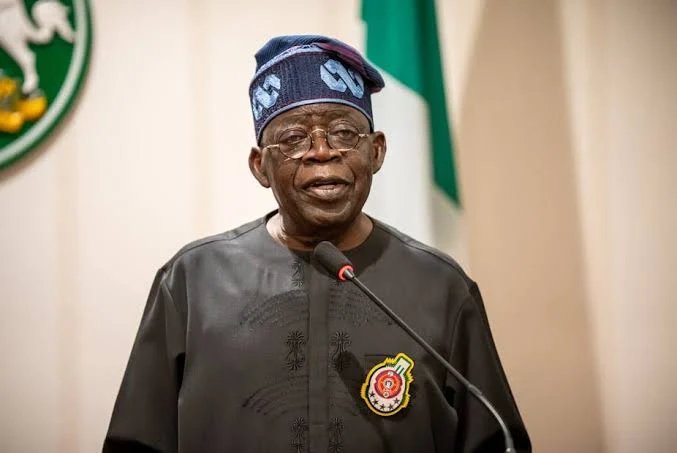
“They just want to coronate Asiwaju; it is as simple as that,” he said, insisting that the timetable is part of a broader self-perpetuation plan.
The New Nigeria Peoples Party (NNPP) also criticised the revised schedule. Its National Publicity Secretary, Dipo Johnson, described the development as an attempt to disadvantage opposition parties and questioned the practicality of mandating direct primaries nationwide within a short timeframe.
Former presidential candidate Gbenga Olawepo-Hashim also rejected the adjusted schedule, describing it as an overreach of INEC’s constitutional authority. He argued that while parties must comply with statutory deadlines for submission of candidates, INEC should not dictate when they conduct their primaries.
Seek Legal Redress or Boycott Polls – APC
Reacting to the criticisms, the National Secretary of the APC, Ajibola Basiru, dismissed the objections as politically motivated and reflective of unpreparedness.
He maintained that the timetable was issued strictly in line with the Electoral Act and advised aggrieved parties to challenge it in court if they believe it violates the law.
“If they feel so strongly that anything untoward has occurred, they could either challenge the timetable in a law court or politically decide to boycott the elections,” Basiru said.
INEC: Opposition Entitled to Their Views
Speaking on Channels Television’s Politics Today, Mohammed Haruna defended the commission’s decision, saying INEC worked strictly within the provisions of the law.
“They are entitled to their opinion. It is the law of the land. INEC does not have the pleasure of rejecting any law. We have to be guided by it,” he said.
Haruna added that parties should have anticipated the changes, noting that they have representatives in the National Assembly who participated in passing the Electoral Act.
He, however, expressed concern over funding constraints, revealing that INEC’s 2026 budget had yet to be approved.
“We are bothered by tight schedules because the budget has not been approved. For our money to be released, it is six months and that’s tough. The printing of ballot papers takes time,” he said.
South-South ADC Endorses Amaechi
Meanwhile, the South-South leadership of the ADC, led by Chief John Odigie-Oyegun, has endorsed former Minister of Transportation, Rotimi Amaechi, for the party’s 2027 presidential ticket.
During a meeting with regional leaders, Odigie-Oyegun disclosed that Amaechi had formally informed them of his intention to contest the presidency.
“In the process, we are glad that our son, His Excellency Chibuike Amaechi, took advantage of this meeting to brief us formally of his intention to run for the presidency of our great nation,” he said.
Odigie-Oyegun added that a unanimous decision was taken to support Amaechi’s ambition, noting that members of the ADC remain mindful of the limited time before the elections and are committed to their political objectives.