Nigeria Cannot Achieve $1tn Economy Without Reliable Data System — Abbas
theoversightnews
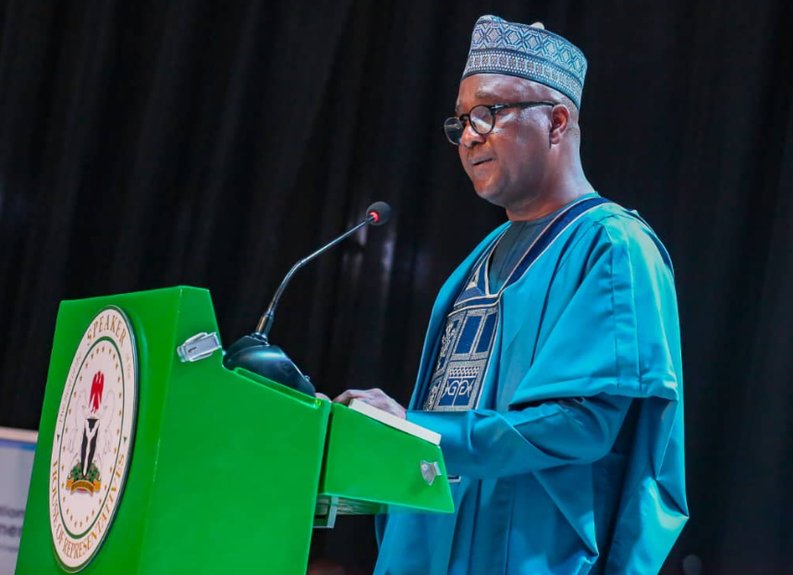
Nigeria Cannot Achieve $1tn Economy Without Reliable Data System — Abbas
The Speaker of the House of Representatives, Tajudeen Abbas, has warned that Nigeria cannot achieve its ambition of becoming a $1 trillion economy without a strong and reliable statistical system.
He made the statement on Monday during a public hearing on the Statistics Bill, 2025, which is aimed at overhauling the country’s data governance structure.
The proposed legislation seeks to repeal the Statistics Act of 2007 and replace it with a new framework designed to strengthen the National Bureau of Statistics, improve data management, secure sustainable funding, and align Nigeria’s statistical system with modern digital realities.
Abbas, represented at the event by the House Leader, Prof. Julius Ihonvbere, said the existing law is outdated and no longer suited for today’s rapidly changing technological environment.
He explained that the current framework, created nearly two decades ago, does not adequately reflect advancements in areas such as digital data systems, artificial intelligence, and big data analytics.
According to him, accurate and timely data is essential for national development and economic planning.
“To plan without accurate data is to build a house on quicksand. For Nigeria to achieve its goal of becoming a $1tn economy, every policy decision, budget allocation, and infrastructural investment must be guided by data that is accurate, timely, and beyond reproach,” he said.
The bill, titled A Bill for an Act to Repeal the Statistics Act No. 9, 2007 and Enact the Statistics Bill, 2025, proposes a comprehensive restructuring of the national statistical system.
It aims to improve coordination among government data agencies, enhance data quality assurance, promote digital data collection and dissemination, and create a more stable funding model for the National Bureau of Statistics (NBS).
Abbas described the bill as more than a routine amendment, calling it a full structural reform intended to modernise Nigeria’s statistical institutions for 21st-century demands.
He noted that when the current law was enacted, technologies such as artificial intelligence, cloud computing, and advanced data analytics were either in their early stages or not widely used in governance and economic planning.
Today, however, governments, businesses, and development partners depend heavily on real-time and high-quality data for decision-making.
The Speaker also stressed the need to reduce duplication in government data collection, saying a more coordinated system would save costs, reduce public burden, and improve trust in official statistics.
“We need a system that inspires absolute trust, whether an investor looks at our numbers in Abuja, London or New York,” he said.
Nigeria’s National Bureau of Statistics remains the country’s official source of socio-economic data, including inflation, unemployment, GDP estimates, and household surveys. However, the agency continues to face challenges such as funding constraints and coordination issues across government institutions.
The proposed bill is expected to address these gaps by building a more integrated and responsive statistical system capable of producing timely and reliable data in line with global standards.
Abbas also urged stakeholders from government, academia, civil society, and the private sector to actively engage with the bill to strengthen its final version, stressing the importance of inclusive lawmaking.
The public hearing was organised by the House Committee on National Planning and Economic Development and brought together stakeholders from across sectors to review the proposed legislation.
If passed, the Statistics Bill, 2025 would represent the most significant reform of Nigeria’s statistical system in nearly two decades.
Meanwhile, the Statistician-General of the Federation, Adeyemi Adeniran, expressed support for the bill, describing it as a timely reform needed to modernise data governance in Nigeria.
He said the country’s statistical system must evolve to reflect advances in digital technology, administrative data, geospatial tools, artificial intelligence, and other emerging sources of information.
According to him, while the 2007 Statistics Act has served its purpose, new realities demand a stronger and more flexible legal framework.
Adeniran explained that the bill contains eight parts and 42 clauses covering key areas such as governance, data management, confidentiality, funding, and coordination.
He expressed confidence that the proposed law would significantly improve the production and use of official statistics, strengthening evidence-based policymaking and national development planning.