279 Nigerians Abducted, 842 Killed in 156 Violent Incidents Recorded in May – Report
theoversightnews
279 Nigerians Abducted, 842 Killed in 156 Violent Incidents Recorded in May – Report
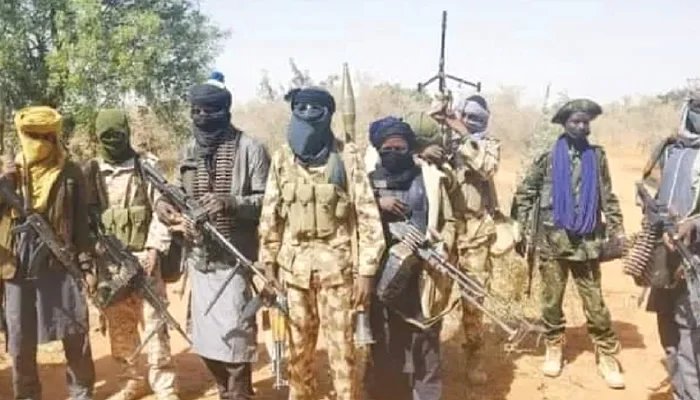
No fewer than 279 people were kidnapped across Nigeria in May 2026, while 156 violent incidents resulted in 842 deaths, according to new data from Nextier’s Nigeria Violent Conflicts Database.
The figures, contained in a statement released on Sunday, showed a significant rise in insecurity compared with May 2025, with violent incidents increasing by 51.5 per cent, casualties rising by 90.1 per cent, and kidnapping cases growing by 19.7 per cent.
The report comes amid renewed concerns that ongoing peacebuilding efforts by governments and development partners have yet to produce measurable improvements despite substantial investments.
In a policy article titled “The Travails of Measuring Peacebuilding in Fragile Contexts,” development practitioner and research professional at Nextier, Jamilu Musa, and Dr Chukwuma Okoli, Visiting Lead for Research and Policy at Nextier and a Political Science lecturer at Nnamdi Azikiwe University, Awka, warned that weak impact assessment systems are affecting the effectiveness of peacebuilding programmes.
The experts explained that although governments and communities continue to implement peacebuilding initiatives, determining whether such interventions are actually reducing violence remains a major challenge.
They stressed that peacebuilding should not be measured only by the number of dialogue sessions, workshops or awareness campaigns conducted, but by whether such efforts lead to reduced violence, stronger trust, improved resilience and greater social cohesion among communities.
Musa and Okoli noted that evaluating peacebuilding outcomes has become even more important due to declining international funding, partly caused by competing global crises such as the prolonged Russo-Ukrainian War and tensions in the Middle East.
They also linked reduced support for peacebuilding initiatives in countries like Nigeria to changing global economic priorities, including protectionist policies associated with US President Donald Trump’s economic nationalism.
According to the researchers, assessing peacebuilding efforts is more complicated than measuring traditional development projects because key indicators such as trust, resilience, public perception of safety and social cohesion are difficult to quantify.
They identified four major areas that should guide peacebuilding assessments in fragile environments: conflict dynamics, social cohesion, governance and inclusion, and resilience or conflict prevention.
The experts explained that conflict dynamics help monitor changing patterns of violence, including kidnapping and communal clashes, while social cohesion focuses on levels of trust and cooperation among communities.
They added that governance and inclusion assess public confidence in institutions and the involvement of women, young people and vulnerable groups in decision-making processes, while resilience measures the ability of communities to prevent conflicts from escalating.
Despite the importance of these indicators, the experts said several challenges continue to affect effective peacebuilding evaluation.
They identified six major obstacles, including attribution bias, short donor funding cycles, rapidly changing conflict situations, difficulties in measuring intangible outcomes, inadequate baseline data and security challenges affecting data collection in conflict-affected areas.
“Peace is not static; it is a work in progress involving both reducing conflict and increasing development,” the analysts stated.
To improve assessments, they recommended the use of modern evaluation methods such as outcome harvesting, most significant change analysis, conflict-sensitive monitoring, perception surveys, social network analysis, participatory monitoring and evaluation, as well as mixed-method approaches.
They also called on federal and state governments to establish formal peace measurement frameworks built around indicators such as trust, inclusion, resilience and public perceptions of security.
The experts further urged stronger cooperation among security agencies, humanitarian organisations, development partners and peacebuilding groups to improve information sharing, avoid duplication and strengthen interventions.
They concluded that measuring peacebuilding should go beyond counting activities, stressing that the most important question is whether such efforts are making communities safer, more inclusive and better prepared to withstand future conflicts.